Drawing tarot cards for free: where to start as a beginner
June 4, 2026, 4 min read
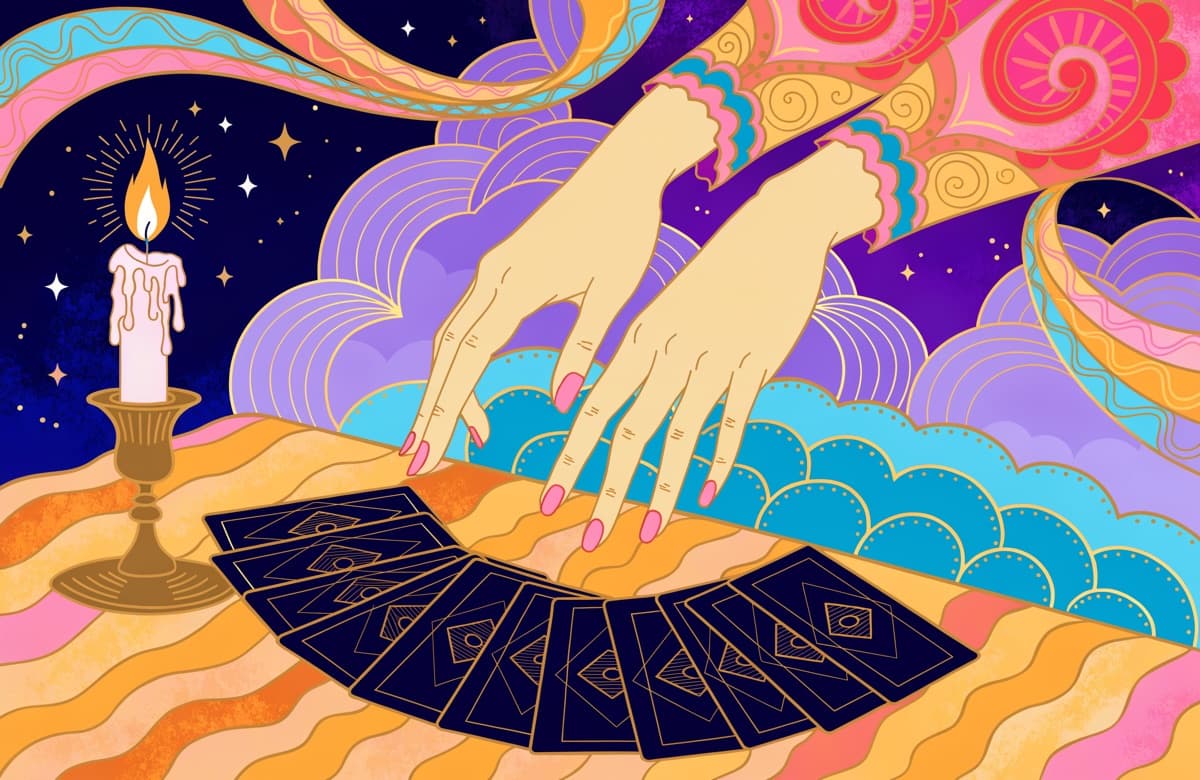
You have probably typed "free tarot reading" into a search engine at least once, on an evening full of doubt or curiosity, hoping to find a clear and immediate answer. Then you landed on those 78 richly illustrated cards, their strange symbols, their sometimes unsettling names, and the feeling of being a little lost took over the desire to actually begin.
Here is the good news: you don't need to be a psychic, nor memorize the symbolism of every arcana, to draw your first cards with confidence. Tarot isn't a test to pass, it's a tool for dialogue with yourself. Here are three simple steps to lay a calm foundation, and what you should genuinely expect from the cards.
Step 1: ask a sincere question
Most beginners jump into a reading without truly clarifying what they're looking for, then feel disappointed by answers that seem vague. Before shuffling the deck, take a moment to phrase an honest question, ideally an open one rather than a yes-or-no question. Instead of "will I see them again?", try "what do I need to understand about this relationship right now?". That small shift changes everything: it turns tarot into a mirror rather than an oracle meant to decide for you.
Step 2: choose a simple spread
There's no need to attempt a full Celtic Cross spread on your very first try. Start with a single card drawn in the morning as an invitation to reflect on the day ahead, or a three-card spread representing the past, the present, and the near future. These simple formats leave room for genuine observation instead of drowning your mind in symbols that all need to be cross-referenced. With time and practice, you can naturally move toward more elaborate spreads once you feel ready for that added nuance.
Step 3: observe before interpreting
When facing a card, the first temptation is to rush toward the guidebook or the app to find "the" official meaning. Try instead to simply look at the image in silence: the colors, the figures, their posture, whatever catches your eye first. This raw observation activates your intuition before the theoretical definition takes over. Only afterward should you compare your impression with the card's traditional meaning. This two-step method is still the one experienced tarot readers use, years after their own beginnings.
Tarot does not predict your fate, it illuminates the choices already living within you.
Start my reading→
What tarot is not
It's essential to defuse a common expectation right away: tarot is not a crystal ball that decides for you, nor a magical device that erases your responsibilities. A card like The Tower, often feared, doesn't announce an unavoidable disaster, it rather invites you to rethink a structure that has become fragile. Likewise, drawing a card commits you to nothing: you remain free to act differently from what the image suggests. Understanding this from the start spares you needless anxiety and puts tarot back in its rightful place, that of a thoughtful companion rather than a verdict.
Building a small personal ritual
The setting in which you draw your cards matters almost as much as the reading itself. You don't need an elaborate altar: lighting a candle, taking three deep breaths, and putting your phone out of reach is enough to create a transition between the noise of daily life and this moment of listening. Even five minutes, set aside consistently, build a habit far more valuable than one impressive reading done just once. It's this gentle regularity, more than the number of cards drawn, that gradually sharpens your intuitive reading skills.
Common pitfalls to avoid as a beginner
A few habits unintentionally slow down beginners' progress. Redrawing a card several times because the first answer wasn't pleasant is one of the most frequent traps: it feeds anxiety rather than clarity. Insisting on a "positive" card at all costs is another, even though the sternest-looking cards often carry a constructive message once properly understood. Finally, dismissing your immediate gut feeling in favor of an interpretation found online strips the reading of its most personal dimension, the one that truly speaks to your specific situation.
Your first reading often matters less for what it reveals than for the habit it sets in motion. By asking a sincere question, choosing a spread that suits your pace, and observing before judging, you gradually build a relationship of trust with the cards, and above all with yourself. Your practice doesn't need to be perfect on the first try: it simply needs to begin, with curiosity and without pressure, to eventually reveal everything it can truly offer you.