The three-card spread: the simplest way to find clarity
June 20, 2026, 4 min read
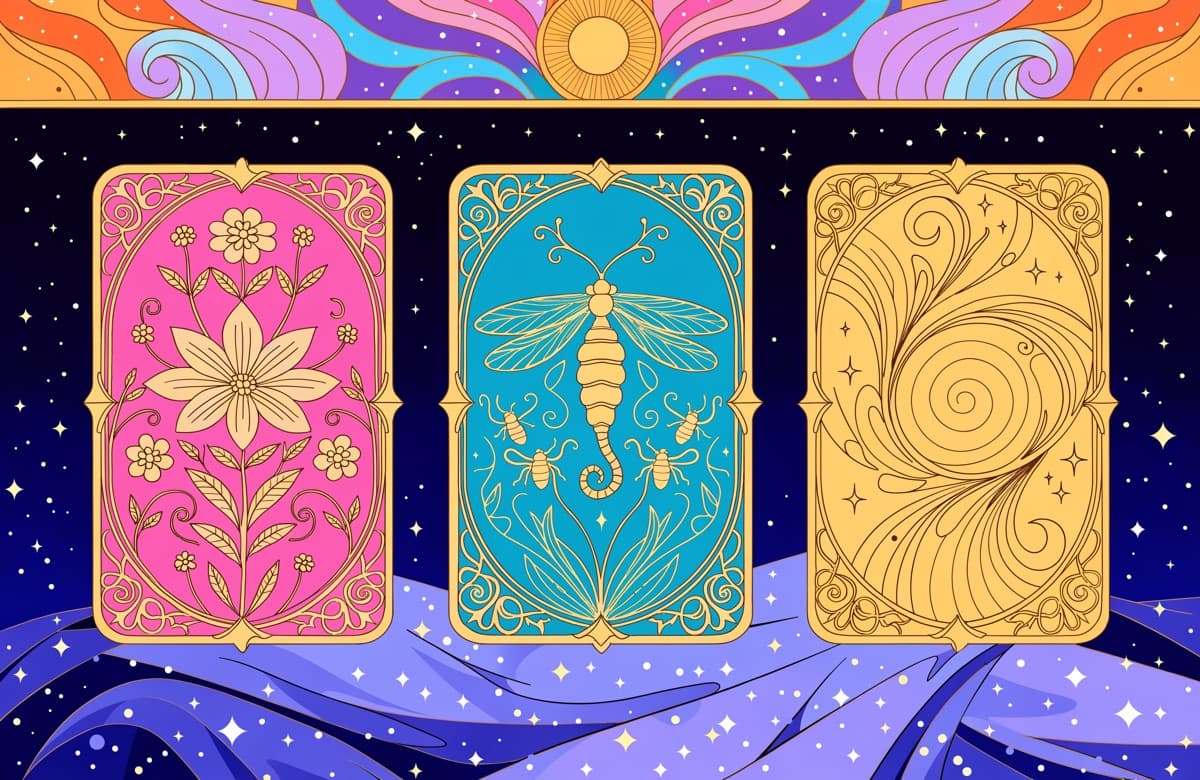
Faced with a deck of 78 cards, most beginners feel quickly overwhelmed. Which spread to choose, how to read so many symbols without getting lost? This is exactly where the three-card spread becomes a trusted ally. Simple in structure, yet rich and nuanced in what it reveals, it welcomes even a first-time reader with open arms.
Past, present, future: this classic layout holds in just three cards what other methods need ten or fifteen to express. In this guide, we will explore how to ask a question that truly opens a dialogue with the cards, how to read each position, and above all, how to weave meaning between the three, even with no prior experience.
Why this spread works so well
The strength of the three-card spread lies in its restraint. Three positions are enough to tell a complete story without drowning the reader in detail. Each card has room to breathe, to be truly seen, unlike more complex layouts where attention scatters. It also makes a wonderful daily practice: a quick question in the morning, a doubt to clarify before a decision, or simply a moment to check in with yourself.
Asking the right question
Everything starts with how you phrase the question. A closed question like 'will I succeed?' locks the answer into a simple yes or no, which flattens the reading. Favor open questions instead: 'what do I need to understand about this situation?', 'what energy is moving through my relationship right now?', 'what is unfolding around my project?' These phrasings invite the cards to tell a story rather than just decide, and that is where the real depth of tarot comes alive.
Past: understanding the roots
The first card lays the foundation. It reveals what led to the current situation: an old decision, a buried emotion, a pattern quietly repeating itself. This is not about dwelling on the past, but about naming it clearly. Often, this card simply confirms an intuition you already carried, giving words to something you sensed but couldn't quite explain. It serves as an anchor, never a verdict on what has been.
Present: seeing clearly here and now
The second card is often the most telling, because it names the energy moving through you right now. It gives shape to something diffuse: a tension, a hope, a hesitation you may not have fully articulated. This is the heart of the spread, so take a real moment to sit with it before moving forward, since everything else in the reading orbits around it.
Tarot does not predict your fate, it illuminates the path you are already choosing.
Start my reading→
Future: a tendency, not a fixed fate
The third card projects the current trajectory if nothing shifts. This is essential to understand: it fixes nothing, it simply illuminates a likely direction. If this card feels encouraging, let it affirm your path. If it unsettles you, take it as an invitation to adjust your choices starting today. The future in tarot is always a conversation with the present, never an unchangeable verdict.
Reading the thread between the cards
The true art of this spread lies not in reading each card in isolation, but in the thread that connects them. Notice repetitions: several cards from the same suit suggest a dominant theme, court cards may point to someone's influence, major arcana signal an important turning point. Ask yourself: does the present card soothe the past one, or intensify it? Does the future card continue the same energy, or mark a clean break? This flowing, almost narrative way of reading is what turns three separate images into one coherent story.
A simple exercise to get started
To practice, choose an open question, shuffle the deck while focusing on it, then draw three cards and lay them left to right. Write down your very first impression of each card in a notebook, before checking any book or guide. Only afterward should you deepen your reading with traditional meanings. Comparing your spontaneous intuition to the classic interpretation is one of the best ways to build your own personal sense of tarot, one that truly belongs to you.
The three-card spread is not a shortcut reserved for beginners, it remains a tool that experienced readers keep returning to for its clarity and honesty. With practice, these three cards will stop feeling simple: you'll discover they actually hold everything you need to move forward with a little more awareness and a lot more confidence.